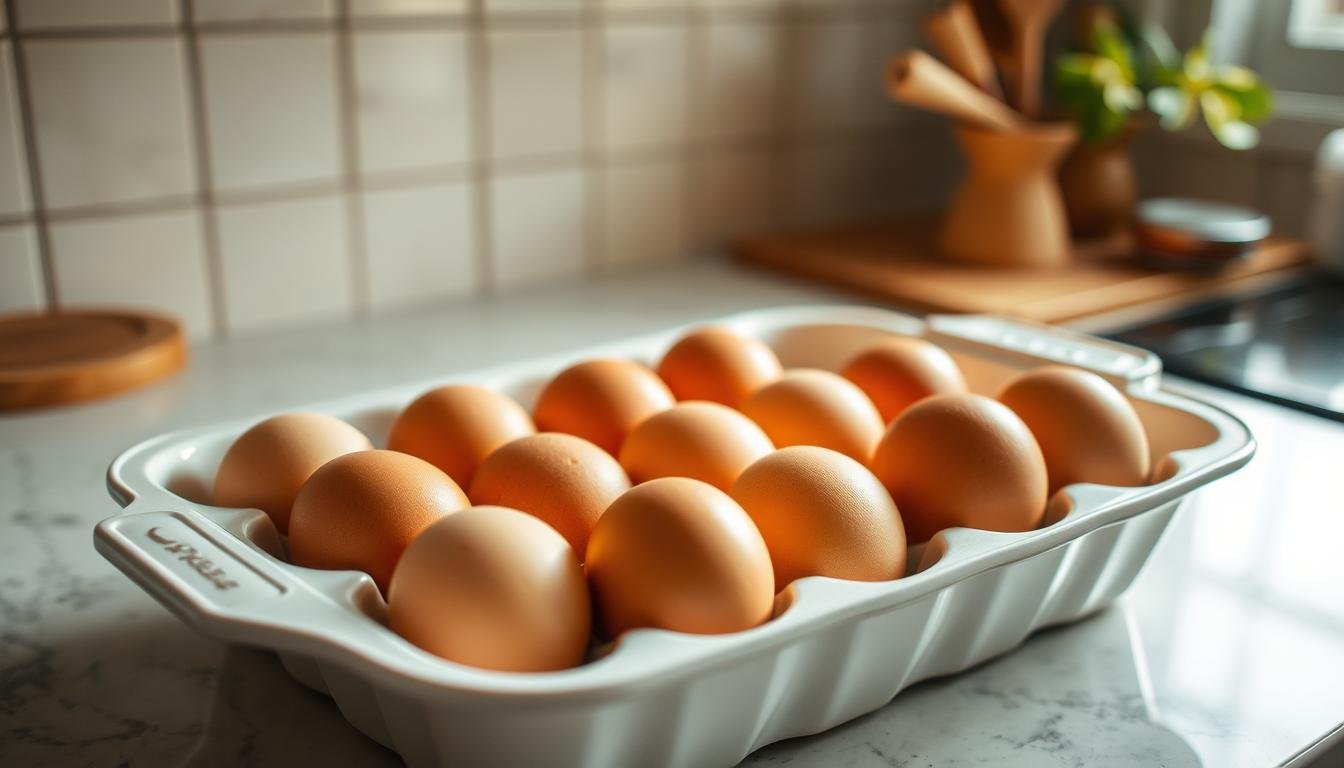
Baking is both an art and a science. Using the right ingredients at the right temperature is key. The temperature of the eggs is often overlooked.
Using room temperature eggs can change the final product’s texture and consistency. Eggs at room temperature mix better with other ingredients. This makes the batter smoother and the final product more even.

Why Do Eggs Need To Be at Room Temperature for Baking?
This simple step can make a big difference in your baking. It’s great for making a delicate cake or cookies. By making sure your eggs are at room temperature, you’re on your way to better baking results.
Key Takeaways
- Room temperature eggs mix more easily with other ingredients.
- Using room temperature eggs results in a smoother batter.
- A smoother batter leads to a more evenly baked final product.
- Room temperature eggs can improve the texture and consistency of baked goods.
- This simple step can elevate your baking, from cakes to cookies.
The Science Behind Egg Temperature in Baking
Egg temperature is key in baking. It changes how batters mix and how baked goods feel. Using eggs at the right temperature is very important.
How Cold Eggs Affect Batter Consistency
Cold eggs make batters thick and uneven. This can make baked goods heavy and not fluffy. Cold eggs also mess up the mix with butter or margarine and sugar.
Effects of Cold Eggs on Batter:
- Denser texture due to improper creaming
- Uneven consistency
- Potential for batter to curdle or separate
| Egg Temperature | Batter Consistency | Final Product Texture |
| Cold | Dense, uneven | Dense, potentially soggy |
| Room Temperature | Smooth, consistent | Light, fluffy |
Temperature Impact on Emulsification
Emulsification mixes liquids that don’t usually go together, like oil and water. Eggs help mix these liquids. At room temperature, eggs mix better, making batters smooth.
Using room temperature eggs makes baked goods better. It’s a simple trick that improves your baking a lot.
Why Do Eggs Need To Be at Room Temperature for Baking?
Using room temperature eggs is very important in baking. They mix better into batters and doughs. This helps make baked goods the right texture and taste.
Improved Volume and Texture
Room temperature eggs make baked goods better. Eggs at room temperature whip up faster and to a greater volume. This makes them lighter and fluffier.
- Increased volume due to better aeration
- Smoother, more even texture
- Better structure in cakes and pastries
Better Integration with Other Ingredients
Room temperature eggs mix well with other ingredients. This is key in recipes like custards or souffles.

Enhanced Flavor Development
The temperature of eggs affects flavor in baked goods. When eggs are at room temperature, they allow for a more even distribution of flavors. This makes your baked goods taste better.
When Cold Eggs Might Be Preferable
But, sometimes cold eggs are better. For example, in meringues or certain mousses, cold egg whites whip up better. They make a more stable foam.
- Cold egg whites for meringues and mousses
- Specific recipes where cold eggs are called for
Quick Methods to Bring Eggs to Room Temperature
Room temperature eggs are key in baking. They make a big difference in your baked goods. Here are quick ways to warm your eggs.
The Warm Water Bath Technique
Warm water baths are fast. Put eggs in a bowl and cover with warm water. Let them sit for 5-10 minutes.

room temperature eggs in baking
Make sure the water isn’t too hot. It should be around 100°F to 110°F. Always check the water before adding eggs.
Planning Ahead: Timing Your Baking
Plan ahead to have room temperature eggs. Take eggs out of the fridge 30 to 45 minutes before baking. This lets them warm up naturally.
- Take eggs out of the fridge 30-45 minutes before baking.
- Store eggs in a cool, dry place to maintain quality.
Emergency Warming Methods
If you’re in a rush, there are quick ways to warm eggs. Use a warm water bath or microwave them gently.
Tips for Emergency Warming:
- Use the defrost setting on your microwave.
- Check eggs frequently to avoid overheating.
- Use a damp cloth to maintain moisture.
Conclusion
Using room temperature eggs in baking makes your treats better. Eggs at room temperature help with batter, mixing, and texture.
Room temperature eggs make your baked goods lighter and fluffier. They also mix better with other ingredients. This means your treats taste more complex and delicious.
To use room temperature eggs, try a warm water bath or plan ahead. These tips help you make tasty baked goods. Whether you’re new to baking or experienced, using room temperature eggs improves your baking. It makes your treats special and enjoyable.
FAQ
Why do eggs need to be at room temperature for baking?
Eggs at room temperature mix better into batters and dough. This makes the final baked goods smoother and more consistent.
How do I quickly bring eggs to room temperature?
To warm eggs fast, put them in warm water for 5-10 minutes. Or, leave them out for a few hours before baking.
What happens if I use cold eggs for baking?
Cold eggs can make batters denser and uneven. This can ruin the texture and look of your baked goods.
Are there any situations where cold eggs are preferable for baking?
Yes, cold eggs are good for making meringues and some souffles. They help create a strong foam.
How does egg temperature impact emulsification in baking?
Room temperature eggs mix oil and water ingredients well. This makes the baked goods tender and consistent.
Can I use the microwave to warm up cold eggs?
No, microwaving eggs can cook them unevenly or even make them explode. Use warm water or let them sit at room temperature instead.
How long does it take for eggs to reach room temperature?
It takes 30 minutes to a few hours for eggs to warm up. This depends on how cold they are and the room’s temperature.